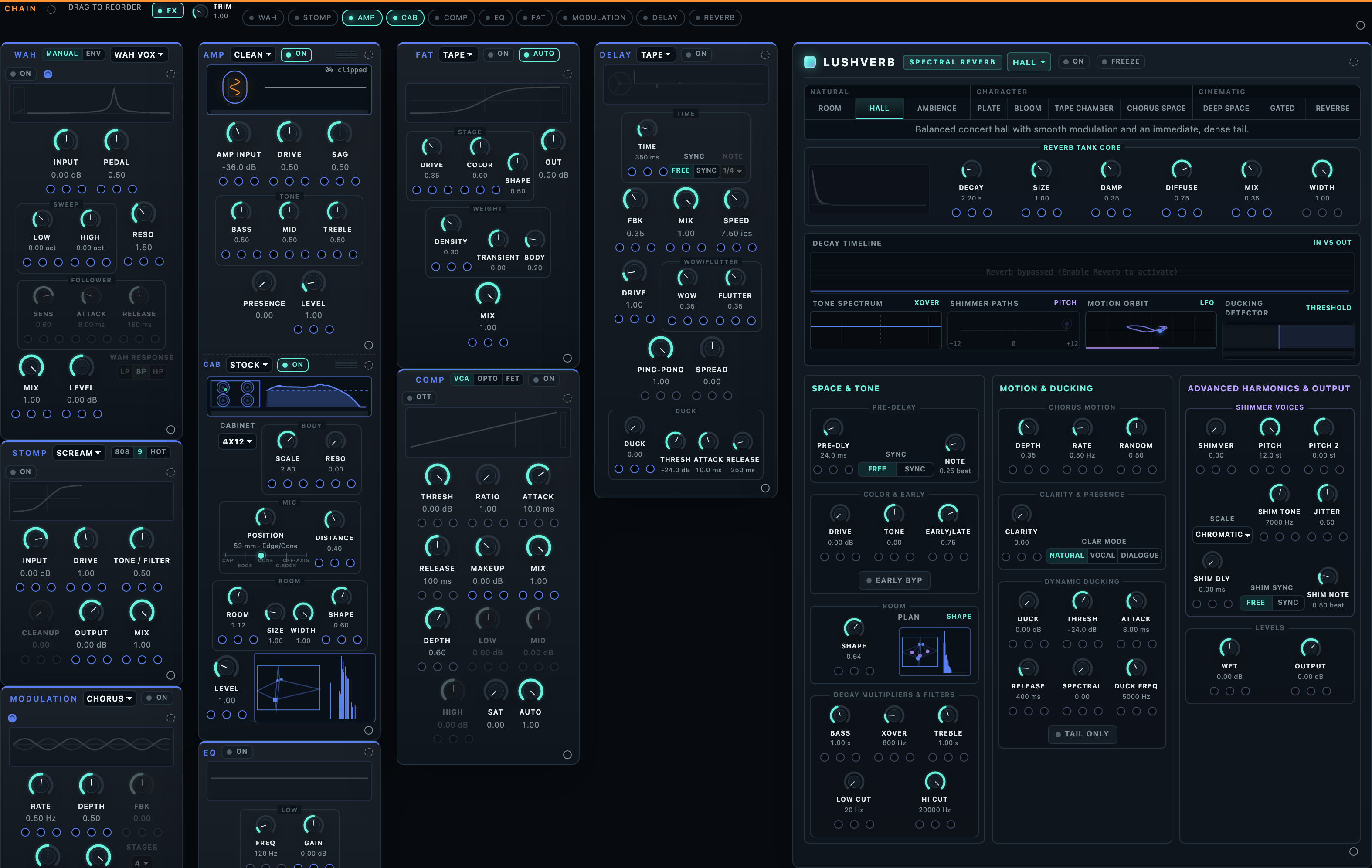
Shape Luxium or external audio with a reorderable chain, a modeled guitar rig, physically responsive cabinets, and a reverb engine designed as an instrument of its own.
Effects page · chain order strip, Wah, Stomp, Modulation, Ext In, Amp + Cab, EQ, Fat, Comp, Delay, LushVerb
A full guitar and studio effects suite
From oscillator to finished tone.
Luxium’s effects chain is a sound-design system of its own. Reorder the stages, feed it from the synth, or process external audio through the same modeled path.
10
amplifier circuits
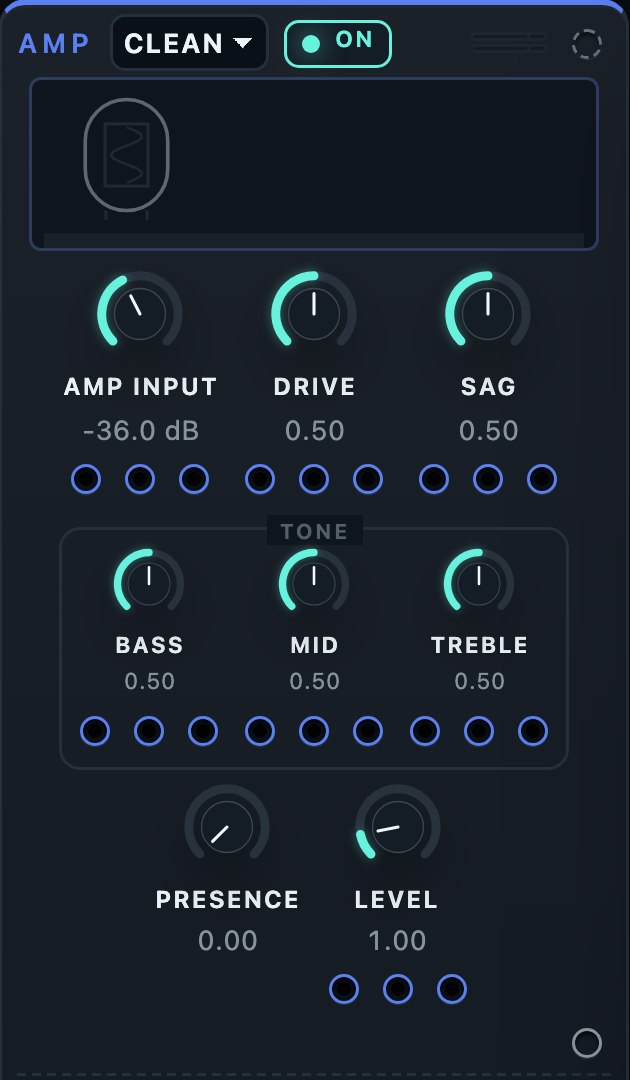
Clean, chime, crunch, blackface-style scoop, tweed warmth, plexi-style roar, high gain, and dedicated bass designs. Each changes the circuit topology, tone network, gain stages, feedback, and sag behavior.
10
physical cabinet designs
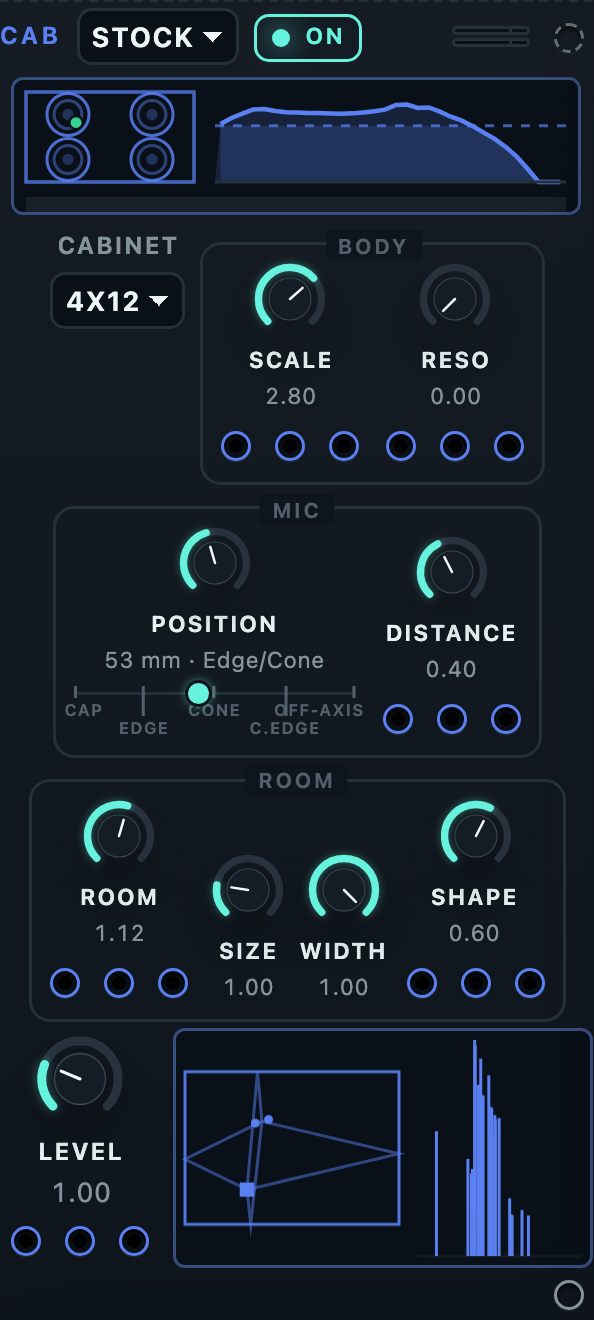
From open-back combos and classic 4×12 stacks to bass 8×10 and sub 1×18 cabinets, built from cone, enclosure, baffle, driver-array, and resonance behavior.
LIVE
microphone positioning
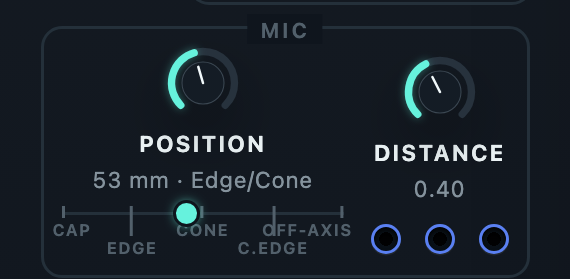
Move continuously from dust cap through cone edge and then tilt off-axis. Choose dynamic, condenser, or ribbon character and move from 2 to 12 inches away.
¼–4×
live cabinet scaling
Scale the cabinet body in real time. Cone modes, baffle step, box volume, driver spacing, reflections, and resonant structure move together as one physical system.
A guitar chord rings until the next one is struck. A keyboard patch with the sustain pedal down piles every chord on top of the last, and through a driven amplifier that pile-up turns to mud. Luxium has two performance controls built around guitar habits instead of piano habits.
Re-Pedal is on by default and works with any sustain pedal. Pressure-to-pitch lives in the header as one depth knob with its own source jack, so there is no matrix slot to set up before it plays.
Performance band · Re-Pedal is the switch beside Jupiter Divide
Re-Pedal
Hold the sustain pedal down and strike chords the way a guitarist strums. With no keys held, each fresh strike damps the ringing chord before the new one allocates, so chords hand off cleanly instead of overlapping. Any key you are still holding keeps its notes sustaining. Through the amp and cabinet, that is the difference between a clear power chord and a smeared cluster.
Pressure bends the pitch
One header control, SRC>Pitch, bends every oscillator together from a single source with a depth of up to ±12 semitones. The source defaults to aftertouch, so turning the depth up is all it takes: press into a note or chord for a bend, ease off and it returns, in the same gesture a guitarist uses on a string.
LushVerb included
Ten spaces. One living reverb engine.
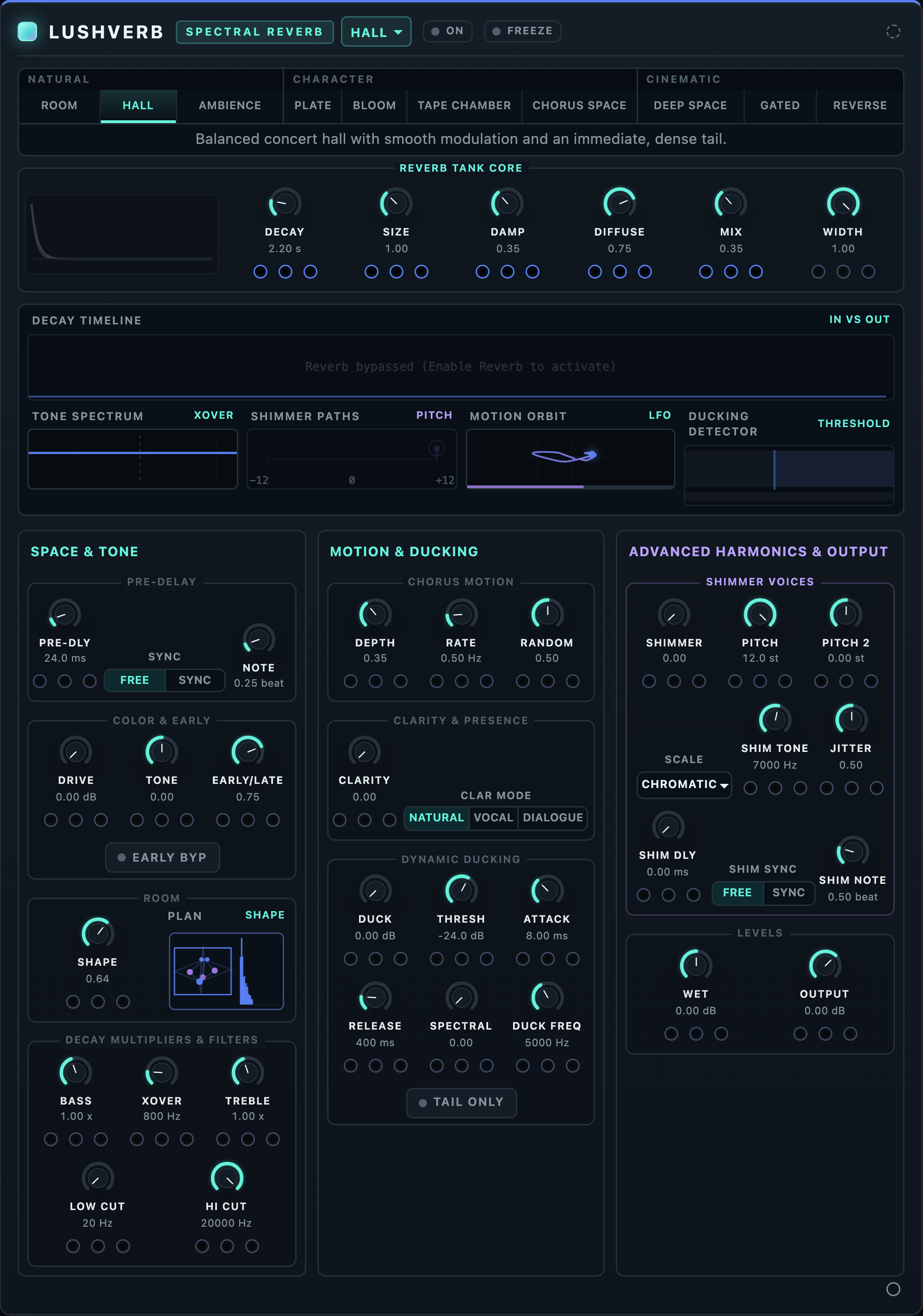
Luxium includes the complete LushVerb engine planned as its own Uniphonic product. Choose Hall, Bloom, Deep Space, Chorus Space, Plate, Tape Chamber, Ambience, Gated, Reverse, or Room, then open the full console instead of settling for a reduced synth reverb.
Dual-pitch shimmer, chorus motion, randomness, diffusion, clarity, spectral ducking, tone shaping, freeze, early/late balance, and a morphing room structure keep the tail rich, wide, and in motion. Variation lives inside the network, where it keeps long decays from feeling static.
Ten algorithms in three families
The LushVerb console
Morph Master
Spaces you sweep through, not switch between.
Several of Luxium’s acoustic controls are continuous morphs. Each one moves a physical model through a series of real structures, with every point in between available under the mouse or under modulation.
LushVerb
Room Shape
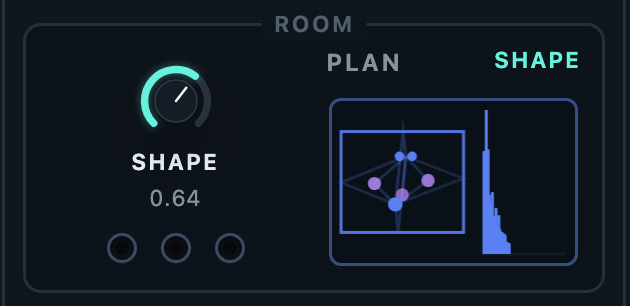
One control carries the reverb through four structures: a studio, a corridor with an obstacle, a chamber with columns, and a hall with balcony fronts. Early reflections and the late tank’s line lengths follow the morph while the decay time holds, so the space changes character without changing length.
Cabinet
Scale
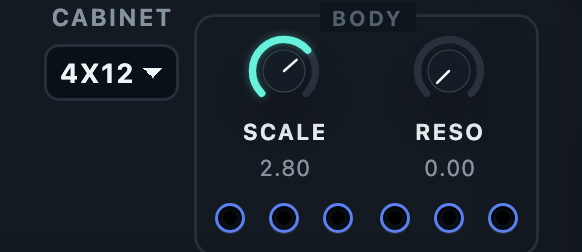
Resize the cabinet body from ¼× to 4× as one continuous physical system. Cone modes, baffle step, box volume, driver spacing, reflections, and resonant structure all move together, from a toy combo to a wall of speakers.
Cabinet room
Room Shape and Room Size
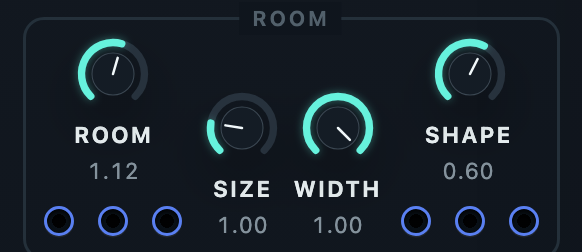
The room mic behind the cabinet morphs through five spaces: a tracking room, a tiled bath, a cistern, a warehouse, and a tunnel. Room Size scales every reflection of the current shape, so the same room can shrink to a closet or open into a hangar.
Microphone
Position and Distance
Mic Position is one fluid path across the speaker rather than a five-way switch: slide from the dust cap to the cap edge, across the cone to the cone edge, then tilt 45° off-axis, and stop anywhere along the way. A separate Distance control moves the mic from 2 to 12 inches off the grille, with proximity and directivity following the geometry.
Morph under modulation
Drag a cable, and the morph moves in time.
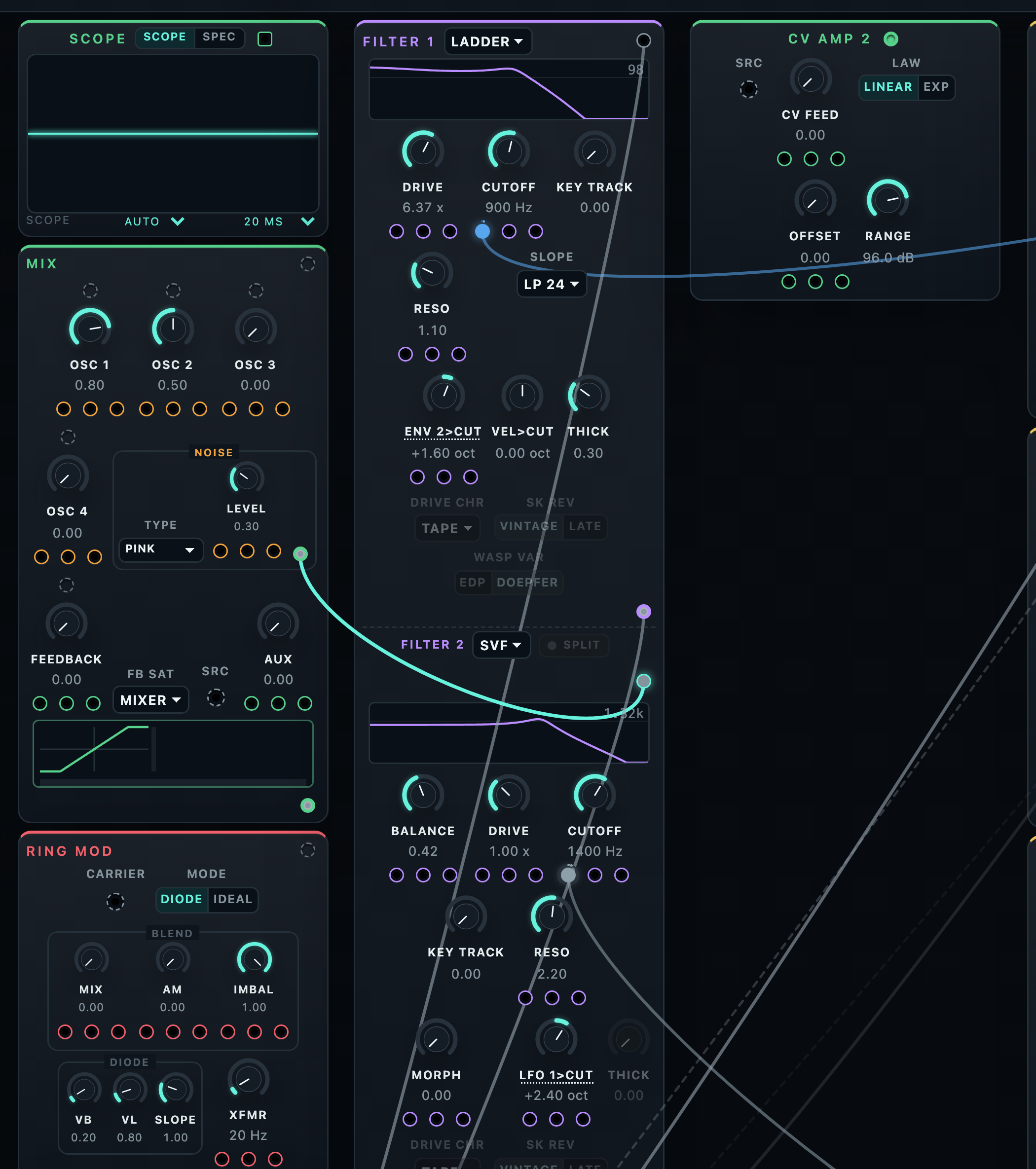
Both Room Shapes, the cabinet Scale, and the mic Distance are modulation destinations, along with most of the other knobs in the instrument. Drag a cable from an envelope, an LFO, an oscillator, a performance control, or any module output onto a control’s jack and the room reshapes, the cabinet grows, or the mic pulls back on a curve you play, rather than a value you set once.
More than an effects tab
Play the rig as part of the patch.
Reorder the chain
Build the processing order around the sound rather than accepting a fixed insert rack.
Modulate the details
Use Luxium’s movement and performance controls to push effects beyond static mix finishing.
Process external audio
The same guitar and studio chain can shape sounds that begin outside the synthesizer.
Keep the rich tail alive
Shimmer, chorus, randomness, room morphing, and ducking give LushVerb density without a frozen or repetitive decay.
Public beta
75% off during the public beta
This early offer is for musicians who want to explore Luxium, report what they find, and help shape the workflow, sound, and capabilities of v1. The price will rise as Luxium matures, and we cannot guarantee how long the current promotion will remain available.